How solar thermal collectors work
A Guide to Solar Heat Systems
As organisations accelerate their transition to net zero, one challenge remains particularly difficult to solve: decarbonising heat. While electricity generation has seen rapid progress through wind and solar PV, heat still accounts for roughly half of global energy consumption and a significant share of carbon emissions.
This is where solar thermal collectors and solar heat systems play an important role. Unlike conventional solar PV panels that generate electricity, solar thermal collectors capture the sun’s energy to produce usable heat for buildings and industrial processes. These systems are increasingly used in commercial and industrial applications to provide solar hot water, support solar space heat, and reduce reliance on fossil fuel-based heating systems.
Understanding how innovative solar thermal and solar PVT systems work and how they improve performance, is essential for organisations exploring renewable heat technologies as part of their decarbonisation strategy.
What Are Solar Thermal Collectors?
Solar thermal collectors are designed to absorb sunlight and convert it into heat. This heat is then transferred via a working fluid, typically a water-glycol mixture, into a heat exchanger. From there the heat is transferred into a hot water tank/thermal storage tank, which end-customers can tap into to access hot water to be used for DHW (domestic hot water), space heating, and even industrial thermal processes.
Solar thermal systems are one of the most established forms of renewable heat technology and have been deployed worldwide for decades. According to the International Energy Agency, solar thermal capacity continues to expand globally as governments and organisations seek low-carbon heating solutions.
Solar thermal panels are typically installed on rooftops, they can be installed as ground-mounted arrays and in some cases on buildings façades, where they can maximise exposure to sunlight.
Common applications include:
• Commercial solar hot water systems for hotels, hospitals, and leisure centres for swimming pool heating
• Solar heat systems for district heating networks
• Solar space heat support for large buildings
• Industrial process heat for manufacturing and food & beverage production
Solar thermal systems can deliver high efficiency and strong carbon savings compared with traditional heating technologies.
How Solar Thermal Systems Work
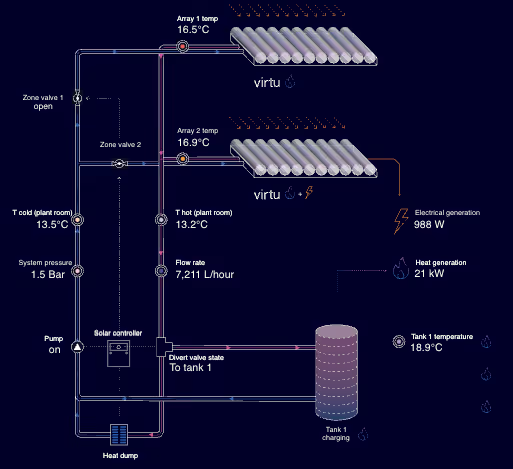
At their core, solar thermal systems follow a simple process: collect solar energy, convert it to heat, and distribute it where needed.
1. Solar Energy Collection
Solar thermal collectors absorb sunlight through a specialised absorber surface. This surface is designed to capture as much solar radiation as possible while minimising heat loss.
The absorber transfers heat to a circulating fluid that flows through pipes within the collector.
2. Heat Transfer
The heated fluid is pumped through a closed-loop system to a heat exchanger. This component transfers the collected heat to the building’s water supply or heating system.
For example, in solar hot water systems, the heat exchanger warms domestic hot water stored in insulated tanks.
3. Thermal Storage
Many solar heat systems incorporate thermal storage tanks that store hot water for use when sunlight is unavailable. This allows buildings to continue benefiting from solar heat during the evening or periods of lower solar generation, i.e. autumn and winter months. This can be more cost-effective than storing electrical energy from PV in batteries.
4. Heat Distribution
The stored heat can then be used for multiple applications including:
• Domestic hot water
• Solar space heat through radiators or underfloor heating
• Industrial process heat
• Pre-heating water for boilers
By reducing the workload on conventional heating systems, solar thermal collectors can significantly cut fuel consumption and carbon emissions.
Types of Solar Thermal Collectors
Several types of solar thermal collectors are used in commercial systems, each suited to different climates and temperature requirements.
Flat Plate Solar Thermal Collectors:
Flat plate collectors (FPCs) are among the most common designs. They consist of a flat absorber plate enclosed within an insulated casing with a transparent cover.
They are widely used for solar hot water systems in residential and commercial buildings due to their reliability and relatively simple design.

Evacuated Tube Solar Thermal: VirtuHOT
Evacuated tube solar thermal collectors contain absorbers surrounded by a vacuum layer. The vacuum significantly reduces heat loss, allowing these systems to operate efficiently at higher temperatures.
Because of this design, evacuated tube solar thermal collectors are often used in colder climates or applications requiring higher thermal output.
Solar PVT Collectors: VirtuPVT
A newer innovation in renewable heat technology is the development of solar PVT collectors (photovoltaic-thermal collectors).
These hybrid systems generate both electricity and heat from the same collector surface, dramatically increasing the energy yield per square metre of roof space.
Solar PVT systems are particularly attractive for commercial buildings where roof space is limited and both electricity and heat demand are high. For more information on the benefits of Solar PVT, explore our VirtuPVT product.
Why Renewable Heat Matters for Net Zero
Heating represents one of the largest sources of carbon emissions globally. According to the International Energy Agency, heat accounts for around 50% of global final energy consumption.
Much of this heat is still produced using fossil fuels such as natural gas and oil.
For commercial and industrial end-customers, decarbonising heat is often more challenging than switching electricity sources because unlike electricity heat can’t be transported over long distances without suffering significant heat losses. Therefore renewable heat solutions must be installed very close to/ at the point of use.
Renewable heat technologies like solar thermal systems offer several advantages:
• Direct replacement of fossil fuel heat sources at the point of use
• Reduced energy costs over time
• Lower carbon emissions
• Improved building energy efficiency
For organisations with ambitious sustainability targets, solar heat systems can play an important role alongside their existing heating technologies, such as heat pumps.
The Role of Hybrid Solar Thermal Energy
Traditional solar thermal panels focus solely on heat production. However, hybrid solar thermal energy technologies are expanding what solar can deliver.
SolarPVT collectors combine thermal and electrical generation from a single system.
This approach provides several benefits:
• Higher energy density: Hybrid systems deliver both heat and electricity from the same surface area, maximising rooftop energy production.
• Improved photovoltaic performance: By removing heat from the PV cells, solar PVT systems can be designed to operate at lower temperatures than conventional solar-PV for improved electrical efficiency.
• Better use of commercial roof space: Commercial buildings often have limited roof area available for solar installations. High energy density solar collectors allow organisations to generate more energy without expanding system footprint.
These advantages make hybrid solar PVT systems increasingly attractive for commercial buildings, hotels, leisure centres, hospitals, and industrial facilities.
Solar Thermal in Commercial and Industrial Buildings

Solar thermal systems are particularly well suited to buildings with consistent heat demand.
Typical commercial sectors adopting solar heat systems now include:
• Hospitality (hotels and resorts)
• Healthcare facilities
• Leisure centres and swimming pools
• Food processing plants
• Breweries and distilleries
• District heating networks
Visit our Case Studies section for more details
These buildings require large volumes of hot water and process heat, making solar thermal collectors an effective renewable heat technology.
In many cases, solar thermal can offset a significant share of annual heat demand while working alongside existing heating technologies, such as gas boiler or modern heat pumps.
For organisations pursuing net zero strategies, solar thermal systems also provide a visible demonstration of commitment to sustainable energy.
Integrating Solar Thermal Systems
Our Virtu technology serves as the ideal standalone and complimentary solution for clients looking to decarbonise their thermal processes.
Solar thermal systems can serve as an ideal technology when twinned with heat pumps to provide pre-heating for water-source heat pump systems, or with absorption chillers for chilled water systems. Our systems can also integrate seamlessly with existing gas-fired plant such as boilers and CHPs, reducing reliance on fossil fuels and significantly cutting carbon emissions for industrial, commercial, and residential users.
We apply a holistic system approach and ensure the maximised system potential is seen through smart controls and thermal storage assessing the practicalities of the installation.
The Future of Solar Heat Systems
As global decarbonisation efforts accelerate, renewable heat technologies are gaining increased attention.
Governments across Europe and the UK are implementing policies to supporting net-zero targets, while organisations face growing pressure to reduce operational emissions.
Solar thermal and technologies like solar PVT collectors, are expected to play a growing role in this transition.
With higher energy density, improved system integration, and the ability to deliver both electricity and heat, next-generation solar heat systems can significantly increase the efficiency of commercial solar installations.
For organisations seeking practical solutions to decarbonise heat, solar thermal collectors offer a proven, scalable pathway to reducing emissions while improving energy resilience.
Conclusion
Solar thermal collectors remain one of the most effective and proven ways to harness the sun’s energy for heating applications. By converting solar radiation directly into usable heat, solar thermal systems provide a highly efficient renewable heat technology for commercial and industrial buildings. To learn more about this, visit Solar Heat Europe.
From solar hot water systems to large-scale solar heat systems supporting industrial processes, these technologies help organisations reduce carbon emissions and reliance on fossil fuels.
With the emergence of hybrid solar PVT collectors and high energy density solar collectors, the role of solar in building energy systems is expanding further. As businesses continue to pursue net zero strategies, solar thermal and hybrid solar technologies will become increasingly important tools for decarbonising heat and building a more sustainable energy future.