Decarbonising the Brewhouse: Why German Breweries Should Be Looking at Solar Thermal Right Now
Overview: This article examines the energy challenge facing German breweries in detail: the process stages that drive thermal demand, the carbon pricing regime that is increasing the cost of meeting that demand with fossil fuels, the government grant support that strengthens the investment case for solar thermal, and how VirtuHOT integrates into the brewhouse as a standalone solution or as part of a broader heat pump and solar PV strategy.
Germany's Brewing Industry at a Glance
Germany has approximately 1,500 breweries as of 2025, producing around 83 million hectolitres of beer in 2024, more per capita than any other country in the world. Bavaria alone accounts for approximately 700 of those establishments, while the German Brewers' Association counts 1,300 member breweries representing around 90% of national production. The sector spans global groups with dedicated energy teams to centuries-old Mittelstand family operations, shaped by a purity law dating back to 1516.
That range matters for decarbonisation planning. Large breweries have the capital and internal resources to model complex energy investment cases. Regional and mid-sized operations face exactly the same regulatory and cost pressures with proportionally less budget to absorb them. Any credible heat decarbonisation solution has to work across that scale spectrum, and integrate with the technologies modern breweries are already deploying, including heat pumps, heat recovery systems, and solar PV.
Brewing is also one of the more energy-intensive processes in the food and beverage sector, and that energy is overwhelmingly heat. With Germany's carbon pricing regime tightening year on year and the Europe Union’s ETS2 regulation now within the planning horizon of most capital investment decisions, the cost of continuing to generate process heat from fossil fuels is rising. As the GermanBrewers' Association has noted, achieving climate neutrality will require alternative heat generation options at scale, and this will not be possible without government incentives and support programmes. That framework is now in place.
For breweries where upfront capital is a constraint, Naked Energy's Heat-as-a-Service (HaaS) model allows a solar thermal system to be installed and operated with zero upfront capital required. The customer pays for the heat delivered, not for the equipment. For more information on our Heat-as-a-Service solution, click here.
Heat Is Not a By-product of Brewing. It Is the Process Itself.
Thermal energy accounts for around 75% of total energy consumption in brewing, with modern facilities typically requiring between 16.7 and 33.3 kWh of thermal energy per hectolitre of beer produced. Every stage of production depends on a precise, continuous, and reliable heat supply. This is not background infrastructure; it is embedded in the product itself.
The five core thermal applications in the brewhouse are:
- Mashing and lautering. Water is heated through a sequence of temperature rests, typically from 61 to 65°C for initial enzymatic starch conversion through to 78°C to halt enzyme activity before the wort is separated from spent grain. Temperature precision at this stage directly determines the fermentability and character of the finished beer.
- Wort boiling. The wort kettle accounts for approximately one-third of the steam used by the entire brewery plant. Boiling is conducted at or close to 100°C for 60 to 100 minutes, driving off volatiles, sterilising the wort, and isomerising hop compounds. It is the single most energy-intensive stage in the brewing process.
- Distillation. For distilleries, heat demand extends to higher temperature ranges for still operation and spirit concentration. VirtuHOT's operating range of 25 to 120°C covers the full distillation temperature envelope, including applications requiring steam-level heat when combined with a heat pump.
- Pasteurisation and packaging. Flash pasteurisation and tunnel pasteurisers require sustained heat at 60 to 75°C. Packaging line sterilisation and bottle washing add continuous hot water demand throughout the production day.
- Clean-in-Place (CIP). CIP cleaning circuits typically operate at 80 to 85°C using caustic solution, running multiple times daily across fermentation vessels, bright beer tanks, pipework, and heat exchangers. This load is consistent, predictable, and runs independently of the main production schedule, making it an ideal first integration point for brewery CIP solar heat.
The important observation across all five stages is that the majority of process heat in a brewery falls within the 25 to 105°C range. That sits squarely within what VirtuHOT evacuated tube collectors deliver reliably, without conversion losses and without electricity dependency. Discover more about solar thermal operating temperatures in our recent blog.
The Rising Cost of Fossil Heat in Germany
The overwhelming majority of brewery process heat in Germany is still generated by gas-fired boilers. Germany's national Emissions Trading System (nETS) for heating and transport fuels began in 2021, bringing a steadily increasing carbon price to bear on that gas consumption.The carbon price rose from €25 per tonne of CO2 in 2021 to €55 per tonne by 2025. At the 2025 rate, a company consuming 5GWh of natural gas annually carried approximately €65,000 in carbon costs within its energy bill.
In 2026, certificates are auctioned within a price corridor of €55 to €65 per tonne, with a ceiling price of €68 per tonne if auction demand exceeds supply. That range will not hold indefinitely. Germany's national ETS is scheduled to end on 31 December 2026, with EU ETS2 set to take effect from 1 January 2027. EU ETS2 will extend market-based carbon pricing to smaller industrial facilities, including the majority of brewery operations, at EU scale for the first time.
For a mid-sized German brewery running significant volumes of natural gas through its boilers, this is not a horizon risk. It is a cost already embedded in operating budgets, set to increase materially, year on year. Gas prices also increase at a consistently higher annual rate than electricity prices, which reinforces the case for reducing gas dependency as a direct commercial priority.
Government Support Makes the Investment Case Stronger
Germany's BAFA (Federal Office for Economic Affairs and Export Control) administers the Process Heat from Renewable Energies grant programme, which provides grants covering up to 55% of the investment in qualifying solar process heat systems. For breweries considering a VirtuHOT installation, this directly shortens payback periods and improves lifetime returns.
A concept study developed for a brewery in the south of Germany illustrates the scale of what is achievable. A system of10,800 VirtuHOT collectors, occupying 8,537 m² of available area, generates 3,310MWh of thermal energy per year and covers 35% of annual thermal demand for Cleaning-in-Place processes at a target temperature of 80°C. Based on assumptions including a gas price of €0.08 per kWh with 4.6% annual inflation and the 45% BAFA subsidy applied, the project carries a CAPEX cost of€3,877,200 and delivers average annual net savings of €441,747, with a payback period of 6.5 years, a lifetime net saving of €8,911,223, and an internal rate of return of 17%. Under a Heat-as-a-Service model, the same project generates lifetime net savings of €2,601,842 with zero upfront investment.
Note: These figures are from a concept study and are based on stated assumptions. Actual savings will vary by site. BAFA scheme terms should be verified directly before investment decisions are made, as subsidy programmes are subject to revision.
Combined with rising carbon costs on one side and predictable solar heat generation on the other, the financial case for acting now rather than waiting is increasingly clear. Click here for more information on our system design solution.

VirtuHOT in the Brewhouse: Built for These Demands
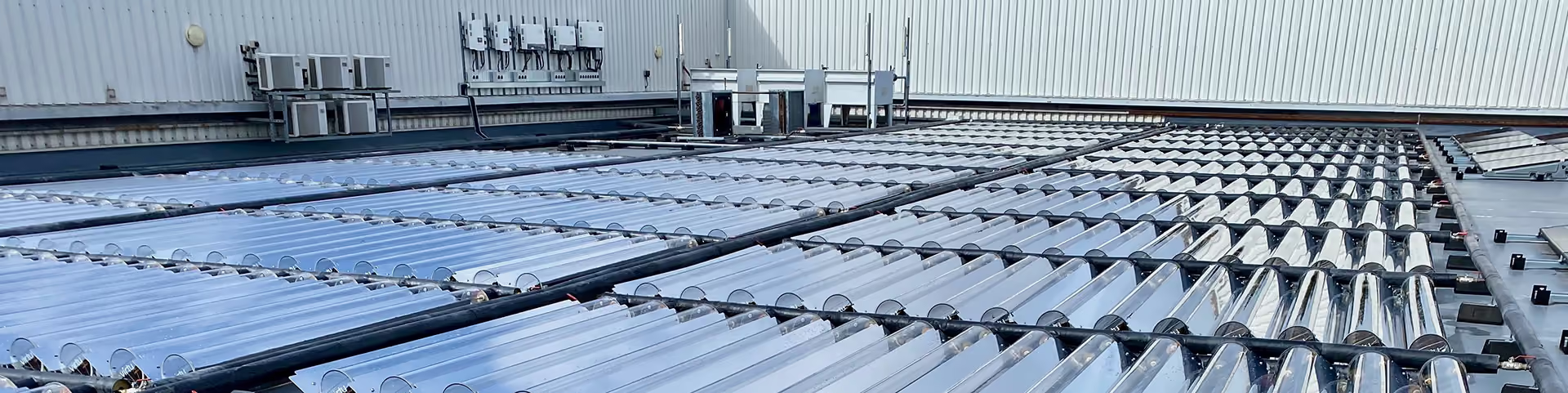
Solar thermal process heat in German brewing is nota new concept, and VirtuHOT builds on this established precedent with higher energy density output than standard flat-plate technology. In practical terms, this means less roof area is required to meet the same thermal demand, which is significant on the constrained industrial rooftops of operational production sites. VirtuHOT's compact, low-profile design also reduces visual impact, an important consideration for heritage brewery venues where architectural character is part of the brand identity.
VirtuHOT integrates directly with existing gas infrastructure without disrupting production or replacing core equipment. It also works alongside and increases the efficiency of heat pump installations and solar PV arrays for operators pursuing a phased, multi-technology decarbonisation strategy. It can also support cooling demands, relevant to refrigeration and chilling operations within the brewery. Visit the VirtuHOT product page to learn more
The typical VirtuHOT integration points in the brewhouse, aligned to the five application areas above:
- Hot liquor tank pre-heat for mashing and lautering (65 to 78°C)
- CIP circuit heat supply (80 to 85°C, multiple daily cycles)
- Pasteurisation, bottle cleaning, and packaging line hot water (60 to 75°C)
- Pre-heat stage upstream of heat pump or boiler for wort boiling (up to 100°C)
- General site hot water and utilities (55 to 65°C)
Pairing VirtuHOT with a Heat Pump
For processes requiring consistent temperatures at the upper end of the brewing range, particularly wort boiling in northern European climates where solar irradiance is lower in winter months, VirtuHOT operates as a high-efficiency pre-heat source within a cascade system.
The principle is straightforward. VirtuHOT provides heat to raise the inlet temperature of the system before it enters the heat pump, on the source side of the heat pump circuit. The heat pump then completes the temperature lift to process level but starts from a higher point, which reduces the lift it must achieve, reducing work done and therefore, improvesing its coefficient of performance (COP), and decreasing electricity consumption. Fossil fuel consumption falls without any change to the process temperature delivered or the reliability of production.
This combined configuration also extends the role of solar thermal into cooling applications. Brewery refrigeration and chilling systems can be integrated within the same multi-technology approach, creating a more comprehensive site energy strategy. The result is a system that addresses the full thermal and cooling profile of the brewery, not just one stage of it. Explore more on how Virtu integrates with heat pumps creating effiecient hybrid systems.
Conclusion
Germany's breweries face a convergence of pressures: raw material costs for barley malt, hops, glass, and aluminium increased between 15 and 25% between 2022 and 2024, carbon costs are rising year on year, and the transition from Germany's national ETS to the EU’s ETS2 in 2027 will extend market-based carbon pricing to operations that have not previously had direct exposure. Against that backdrop, locking in predictable, low-carbon process heat through VirtuHOT solar thermal is both a sustainability decision and a margin protection decision.
Solar thermal brewery technology is proven inGerman brewing facilities. The technology is commercially mature, significant grant support is available through BAFA, and the cost trajectory of continuing to rely on fossil heat is well-established. The breweries that act now will be better positioned, operationally and financially, than those that wait.
Frequently Asked Questions
What makes brewing such an energy-intensive process?
Thermal energy accounts for around 70 to 75% of total energy consumption in brewing. Every core production stage, from mashing and wort boiling through to pasteurisation and CIP cleaning, requires a sustained, temperature-precise heat supply. Wort boiling alone accounts for approximately one-third of the steam used across the entire brewery plant.
Which stages of the brewing process are most suited to solar thermal?
CIP cleaning circuits (80 to 85°C), hot liquor tank pre-heat for mashing and lautering (65 to 78°C), pasteurisation and packaging line hot water (60 to 75°C), and general site hot water supply (55 to 65°C) are all well within the operating range of VirtuHOT collectors. Wort boiling, which requires close to 100°C on a continuous basis, is best served by a solar thermal pre-heat stage paired with a heat pump or boiler.
How does ETS2 affect German breweries specifically?
Germany's national ETS ends on 31 December 2026. EU ETS2 takes effect from 1 January 2027, extending market-based carbon pricing to buildings and smaller industrial facilities, including the majority of brewery operations. Carbon costs embedded in natural gas prices will continue to rise as a result. Breweries that reduce their gas consumption before that transition take effect will enter the new pricing environment with lower exposure.
What government grants are available for solar thermal in German breweries?
Germany's BAFA administers the Process Heat from Renewable Energies grant programme, which has provided grants covering up to 55% of the investment cost for qualifying solar process heat systems. Breweries should verify current terms and eligibility directly with BAFA before making investment decisions, as programme conditions are subject to revision.
What is the typical return on investment for a VirtuHOT installation in a brewery?
Returns depend on the size of the system, site-specific conditions, applicable grant support, and energy pricing assumptions. A concept study for a brewery CIP application in southern Germany, with BAFA subsidy applied, indicated a payback period of 6.5 years, an IRR of 17%, and lifetime net savings exceeding €8.9 million. These figures are based on stated assumptions and will vary by site. A detailed feasibility assessment is the starting point for any investment decision. For more information on our system design solutions, please click here.
Can VirtuHOT work alongside the heat pump and solar PV systems we already have?
Yes. VirtuHOT is designed to integrate with existing heating plant, including gas boilers, heat pumps, heat recovery systems, and solar PV arrays. In a cascade configuration, VirtuHOT pre-heats water before it enters the heat pump, reducing the temperature lift required and improving heat pump efficiency. This approach is common in breweries pursuing a phased, multi-technology decarbonisation strategy.
What is Heat-as-a-Service and how does it work for breweries?
Heat-as-a-Service is a financing model where Naked Energy and its strategic financier, funds, installs, operates, and maintains the VirtuHOT system. The brewery pays only for the renewable heat delivered, with no upfront capital required. The arrangement treats heat costs as operating expenditure rather than capital investment, keeps payment obligations off the balance sheet, and transfers performance risk to the provider. Click here more for details on our Heat-as-a-Service solution.